Card payments for window cleaners are a different problem to card payments for a shop. Your customers are rarely home, the amounts are small and repeat every four weeks, and knocking back round on a Friday night to collect £15 a door is dead time you never get back. This guide compares the three honest options: payment links by text, Direct Debit for the round, and a tap on the reader when someone actually answers the door.
The round-based collection problem
Window cleaning, gutter rounds, bin cleaning and similar trades share one awkward feature: you do the work whether or not the customer is standing there. That breaks the normal payment moment. There is no counter, no doorstep handover, just a note through the letterbox and hope.
The traditional fix, collecting cash on a second visit, is quietly brutal. If your round is 60 houses and a third pay on the knock-back, you are burning an evening a week acting as your own debt collector. That evening is worth more than any card fee ever charged.
So the question is not 'card reader or cash'. It is 'which remote payment method fits a repeat £15 job', and there are two serious answers: payment links and Direct Debit.
Payment links by text: the flexible option
A payment link is a one-tap card payment sent by text or WhatsApp. Clean the windows, send the link from the pavement, and most customers pay from the sofa the same day. Providers like SumUp and Square include payment links with no monthly fee, so your only cost is the transaction percentage.
The strength of links is flexibility. One-off jobs, first cleans, gutter extras and conservatory roofs all fit, because you set the amount each time. The weakness is that the customer still has to act. A link is politer than a knock, but it can still be ignored, and you will need a system for chasing the stragglers.
A simple routine works: send the link when you finish, one reminder after three days, and a conversation before the next clean if it is still unpaid. Most window cleaners find link payment rates settle high once customers get used to the rhythm.
Direct Debit: the round-trade standard, honestly compared
GoCardless-style Direct Debit has become the default for established rounds, and for good reason: the customer authorises once, then you pull the payment after each clean. No knocking, no chasing, no link to ignore. For a fixed four-weekly round, it is the closest thing to payroll a window cleaner can get.
The honest trade-offs: Direct Debit takes a few working days to land rather than next-day, the customer can cancel the mandate at any time, and you need them to fill in a form once, which some older customers resist. Fees are typically a small percentage plus pence per collection, and several round-management apps bundle it in. Check the current pricing of whichever service you use, as structures vary.
Compared with a card reader, Direct Debit wins on repeat collection and loses on immediacy and one-off jobs. Most rounds end up hybrid: Direct Debit for the regulars, payment links or a reader for everyone else. If someone insists on cash, take the cash. This is not a religion.
Tap to Pay when they are home
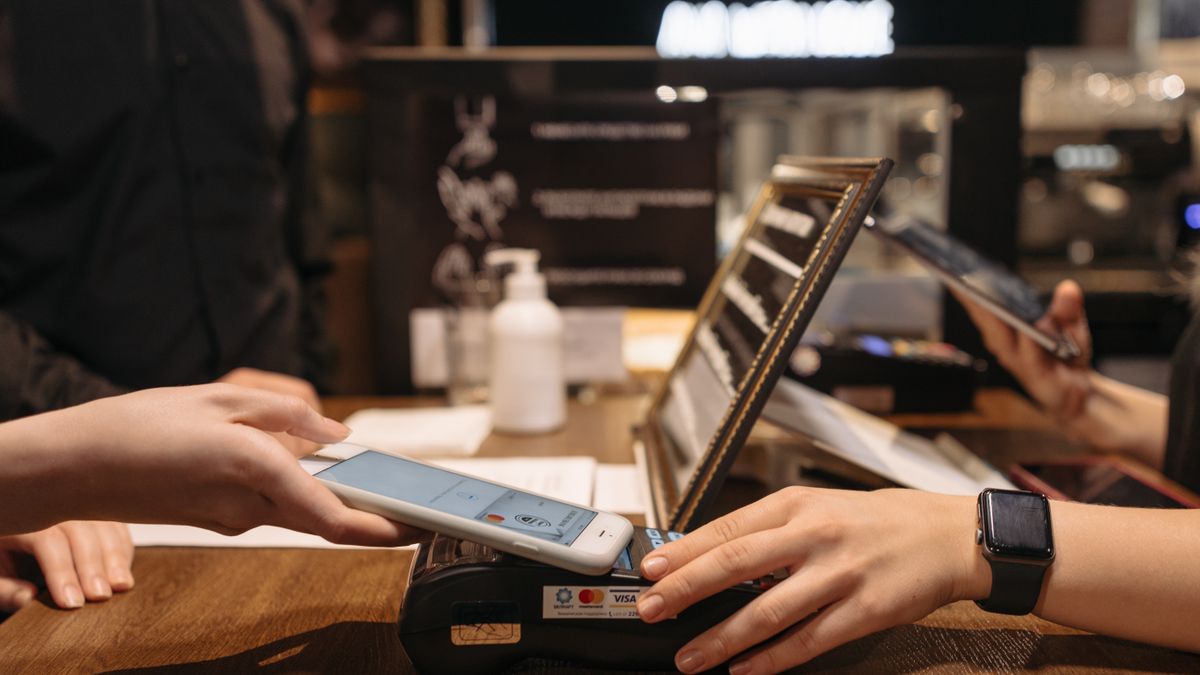
When the customer does answer the door, take the money there and then. A £19 SumUp or Square reader lives in the van pocket, and increasingly you do not even need that: Tap to Pay turns a recent iPhone or Android into the card machine, with the customer tapping their card or phone on yours.
Remember the contactless card cap is £100 per tap, though phone wallets like Apple Pay and Google Pay have no cap, which matters for bigger one-offs like a full soffit and gutter job. For a £15 clean, any contactless method is instant.
Doorstep card acceptance also quietly upsells. 'While I'm here, want the conservatory roof done for £40?' converts far better when the customer does not have to find cash.
Pricing a £15 clean against the fees
Here is the maths that worries people, done properly. A £15 clean on SumUp at 1.69% costs 25p in fees. At 1.75% it is 26p. Over a 60-house round, if every single house paid by card, you would pay roughly £15 in fees per full round, about the price of one house.
Now price the alternative. If knock-backs cost you two hours a week and your working rate is £30 an hour, cash collection costs £60 a week, or roughly £240 a month, in unbillable time. The fees are not the expensive option. Plug your own round size into our fee calculator if you want the exact figure.
Should you put prices up to cover fees? A blanket 25p rise per clean covers card costs entirely and no customer will blink at it. Do not add a visible card surcharge, though. It irritates customers, and consumer card surcharges are banned in the UK anyway.
Who should use what
New round, still growing: start with payment links only. No hardware, no monthly cost, and you learn which customers pay promptly. Add a cheap reader once you have enough doorstep encounters to justify it, and see our mobile business payments guide for the wider kit question.
Established round of 100+ regulars: Direct Debit for the core round, links for extras. The admin saving compounds every month, and your income becomes predictable enough to plan around.
Who should walk away? If your round is genuinely all cash-happy pensioners who are always home, changing nothing is a legitimate choice for now. But every year a few of those customers are replaced by families who have not carried cash since 2019, so have a link option ready before you need it.
FAQs
What is the best way for window cleaners to take card payments?
A hybrid works best: GoCardless-style Direct Debit for regular round customers, payment links by text for one-offs and extras, and Tap to Pay on your phone or a £19 reader for customers who are home. Direct Debit removes chasing entirely for repeat cleans.
How much do card fees cost on a £15 window clean?
About 25p at SumUp's 1.69% flat rate, or 26p at 1.75% with Square or Zettle. Even if an entire 60-house round paid by card, fees total roughly £15, far less than the time cost of collecting cash on knock-backs.
Is Direct Debit better than a card reader for a cleaning round?
For repeat round customers, usually yes: payment is pulled automatically after each clean with no chasing. It is slower to land than card payments and needs a one-off signup from the customer, so keep payment links or a reader for one-off jobs and new customers.
Can window cleaners charge customers extra for paying by card?
No. Surcharges on consumer card payments are banned in the UK. If fees bother you, build them into your pricing; a 25p rise per clean more than covers the cost of a £15 job paid by card, and no customer will notice.