A bakery POS system has one job above all others: keep the 7am queue moving while half your customers are still asleep on their feet. Bakeries are a strange retail case, with tiny ticket sizes, a brutal morning peak, a wholesale side nobody talks about, and stock that becomes worthless at closing time. This guide covers the till setup, the card fee maths on a £3.20 sale, and why the free software tier is usually all a bakery needs.
The 7am rush: one-tap bestsellers or bust
Bakery trade is absurdly front-loaded. The commuters between 7am and 9am can be half the day's takings, and every one of them wants the same six things: a loaf, a croissant, a coffee, a bacon roll. Your till should sell those in one tap each.
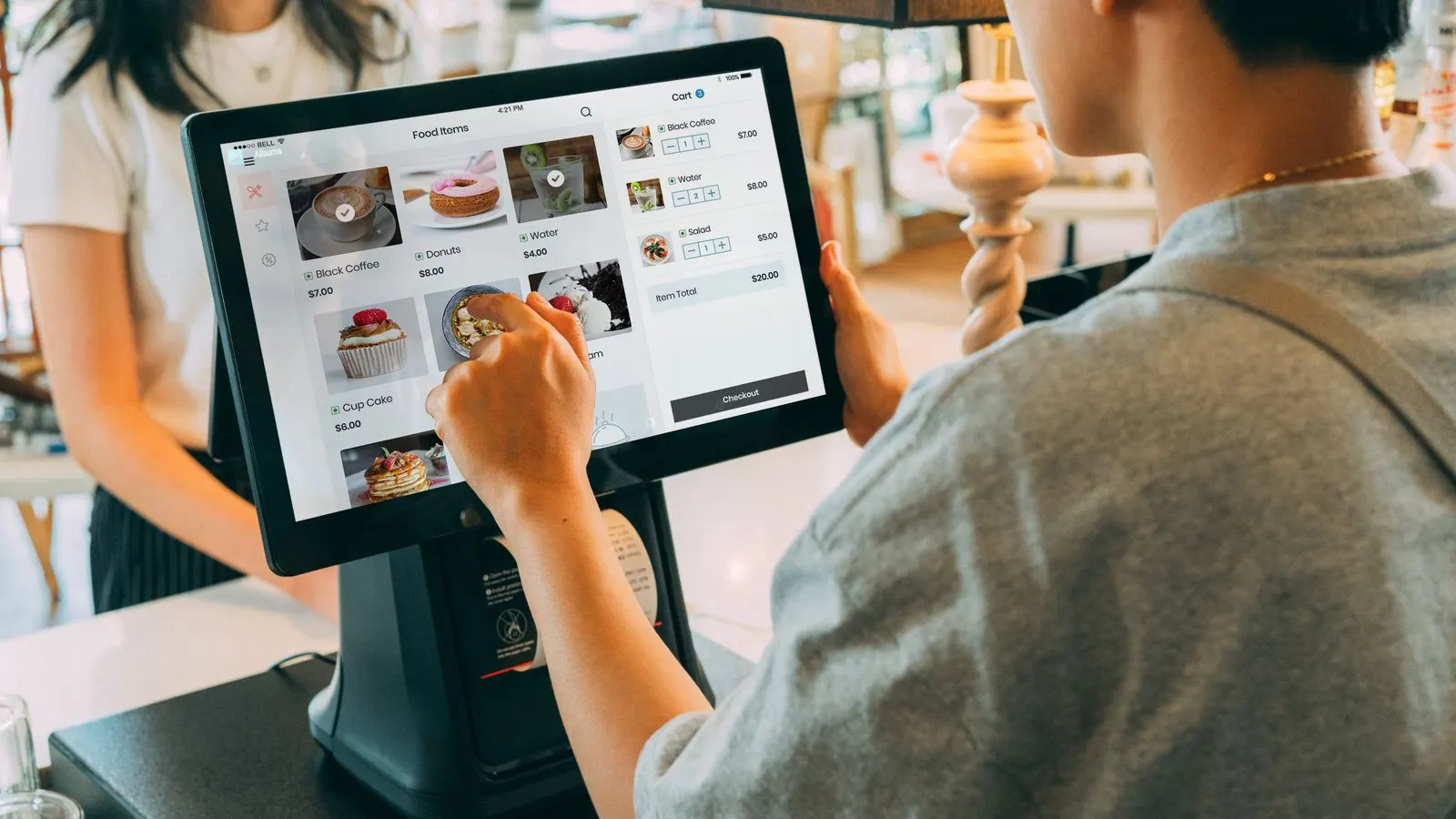
This is the real test of a bakery POS: how fast can a half-trained Saturday assistant ring up a sourdough and a flat white with a queue out the door? Big bright item buttons for your top sellers, a second page for everything else. If ringing up a sale takes more taps than making the coffee, the software has failed.
Free POS apps handle this well now. Square's free software with a £19 reader gives you item grids, modifiers for the coffee orders, and daily reports, with no monthly fee. Start there before paying for anything; our roundup of free POS software covers the options.
Low tickets and fee pennies: the honest maths
Bakery ticket sizes are small, so people worry the card fees eat them alive. Here is the actual arithmetic: a £3.20 croissant-and-coffee at SumUp's 1.69% costs 5p in fees. At Square's 1.75%, 6p. On £600 of card takings a day, you pay roughly £10.14-£10.50, and you can check your own volumes on the fee calculator.
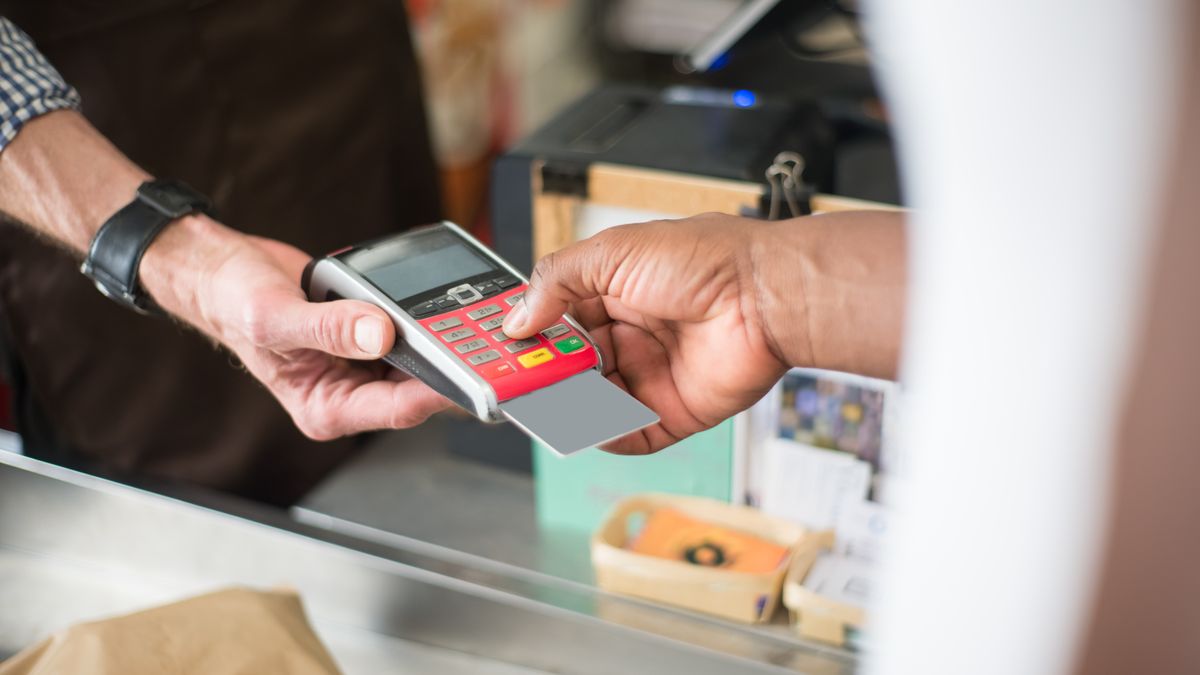
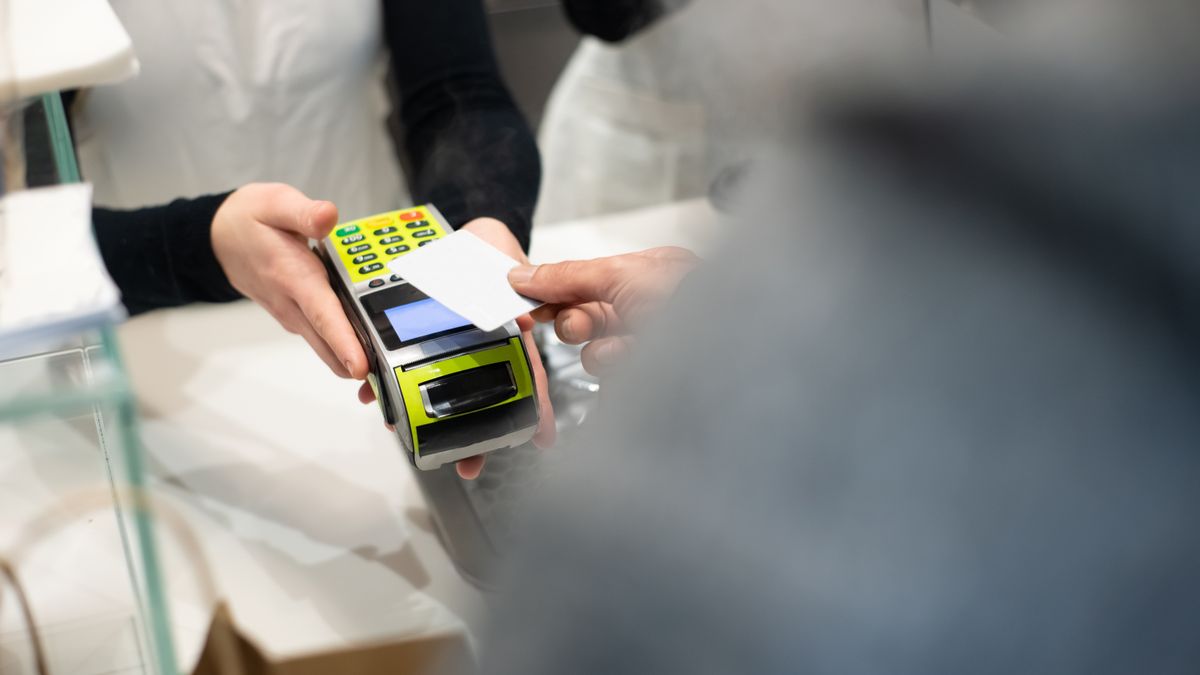
Now weigh the counter speed. Contactless taps clear in seconds and never need change from a fiver. At 8am, throughput is money: two more customers served per busy hour, at a £4 average, is £8 an hour, which dwarfs the fee bill for the whole morning.
If your card volume grows serious, SumUp's Payments Plus tier from 0.99% cuts the percentage, and quote-based providers like Dojo compete at higher volumes. But for a single-counter bakery, flat-rate and no contract is the right starting shape.
The wholesale side: cafes, invoices and pay-by-link
Plenty of bakeries quietly run a second business before the shop opens: trays of bread and pastries to the cafes and delis nearby. That is invoiced trade, not counter trade, and it needs different payment plumbing.
The old pattern, monthly invoices settled by cheque or eventually-transfer, ties up your cash in other people's fridges. Better: invoices with a payment link attached, so the cafe owner pays by card in ten seconds, or a virtual terminal for taking a card payment over the phone. Square bundles invoicing free with its POS, which keeps shop and wholesale money in one set of reports.
One honest note: card fees on invoiced wholesale trade are a real cost at scale, and long-standing accounts may be better on bank transfer or Direct Debit. Use payment links to kill late payment on the accounts that drag, not necessarily on the ones that pay like clockwork.
Counting the trays: reports that cut waste
Unsold bread at 5pm is money in the bin, and waste is the bakery margin-killer nobody's till used to measure. A POS that tracks item-level sales changes that: the end-of-day report tells you that you sell 40 white bloomers on Fridays and 24 on Tuesdays, so you stop baking Friday quantities on a Tuesday.
You do not need inventory software with batch tracking and supplier modules. You need two numbers per product: baked and sold. The till gives you sold; a pencil gives you baked. Compare them for a fortnight and your bake sheet almost writes itself.
The same reports catch the quiet winners. If the till says cheese twists sell out by 10am every single day, that is not a stock problem, it is an underbaking problem wearing a disguise. Data from a free till, acted on weekly, is worth more than any premium software module.
Market stalls and satellite pitches
Bakeries travel well: a Saturday farmers' market stall or a station pop-up can add a serious slice of weekly revenue with stock you were baking anyway. The payment kit just needs to be portable and independent of shop Wi-Fi.
A second reader on the same account handles it. A standalone SIM reader like the SumUp Solo (~£79) works anywhere with mobile signal and does not care whose phone is at the stall. We have a full guide to card readers for market traders covering battery life and signal tactics.
Keep the stall on the same POS account as the shop and your item reports merge, so you learn whether the market crowd buys the same things the shop crowd does. Spoiler from every baker we have compared notes with: they do not, and that is useful to know.
What to buy, by bakery type
Single-counter high-street bakery: Square's free POS on a tablet with a £19 reader, or SumUp at 1.69% if the lowest flat rate matters more to you than software depth. No contracts, under £100 all-in, running this week. Browse no-monthly-fee readers for the field.
Bakery-cafe hybrid with tables and coffee volume: you are edging into cafe territory, where table management and modifiers matter more; our cafe POS guide covers that shape of business properly.
Who should pay for premium POS software? Multi-site bakeries, serious wholesale operations needing proper account management, and anyone whose stock and staff complexity has genuinely outgrown the free tiers. Everyone else is buying features they will never tap. Check the current terms of whatever tier you choose, as free-plan limits shift over time.
FAQs
What is the best POS system for a bakery?
For most single-site bakeries, Square's free POS software with a £19 reader is the strongest start: one-tap item buttons for the morning rush, daily sales reports and free invoicing for wholesale accounts, with no monthly fee. SumUp at 1.69% flat is the pick if the cheapest rate is the priority.
Are card fees worth it on small bakery sales?
Yes. A £3.20 sale costs 5-6p in fees at flat rates of 1.69-1.75%, and contactless keeps the morning queue moving faster than cash and change. Around £600 of daily card takings costs roughly £10 in fees, typically less than the value of the extra customers served at peak.
How should a bakery handle wholesale payments from cafes?
Attach a payment link to every invoice so accounts can pay by card in seconds, and chase less. For reliable long-standing accounts, bank transfer or Direct Debit avoids card fees on volume. A virtual terminal covers card payments taken over the phone.
Can a bakery POS help reduce waste?
Yes, through end-of-day item reports. Comparing what was baked against what the till says sold, per product and per weekday, shows exactly where you are overbaking. Two weeks of that data is usually enough to rewrite the bake sheet and cut binned stock noticeably.