Choosing a business bank account for card payments sounds like admin, but get it wrong and your card machine provider can freeze payouts while it asks awkward questions. The account name needs to match your trading identity, the payout timing needs to suit your cash flow, and if you still take cash, the deposit fees need checking too. This guide walks through what actually pairs well, without trying to sell you a bank.
Why your bank account and card machine need to get along
Every card payment you take ends up in a bank account, and providers care a great deal about which one. When you sign up with SumUp, Square, Zettle or a quote-based provider like Dojo, you nominate a settlement account, and that is where your money lands after each payout run.
The pairing matters for three reasons: whether the provider will accept the account at all, how quickly you can actually use the money, and how much friction you add to your bookkeeping. Pick well and you never think about it again. Pick badly and you are on hold to a support line while this week's takings sit in limbo.
If you have not chosen a card machine yet, it is worth sorting both together. Our card machine comparison shows which providers pay out where and how fast, which makes the bank decision easier.
The name-matching rule providers do not shout about
Here is the bit that catches people out. Most provider terms and conditions want the settlement account to match your trading identity: if you trade as Smith Plumbing Ltd, they want to pay Smith Plumbing Ltd, not your personal current account or your partner's account.
This is anti-fraud plumbing, not pettiness. Providers have to show regulators that money goes to the business that earned it. Mismatched names are one of the most common reasons for payouts being held while a provider asks for proof of identity and bank statements.
The fix is boring but effective: open the account in your exact trading name before you apply for the card machine, and use the same name on both applications. Five minutes of care up front saves a frozen payout later.
Sole trader vs limited company: what the law actually says
Sole traders can legally use a personal bank account for business, because legally you and the business are the same person. Limited companies cannot: the company is a separate legal entity and its money must sit in its own account, full stop.
But legal is not the same as sensible. Even as a sole trader, provider terms typically want an account that matches how you trade, most personal account terms prohibit business use, and mixing money makes your Self Assessment slower and messier. Separation costs nothing and makes tax season far less painful.
If you are a sole trader weighing this up, our guide to card machines for sole traders covers the whole setup, not just the banking.
The free business accounts worth a look
The good news: you do not need to pay a monthly fee for a business account any more. Several UK providers offer free business current accounts with app-based banking that opens in days rather than weeks. We have no affiliation with any of them; they are simply the names that come up most.
The main free options are:
- Starling Bank: free business account with no monthly fee, full UK banking licence, and free electronic payments.
- Monzo Business: free Lite tier with a paid tier above it, strong app, quick setup for sole traders and limited companies.
- Tide: free basic tier with per-transaction charges on some payment types, popular with new limited companies for fast setup.
- Traditional high-street banks: often 12 to 30 months free then a monthly fee, but with branch access if you deposit cash regularly.
Payout timing: where your money actually goes and when
A card payment is not money in your account; it is a promise of money. Most flat-rate providers pay out the next working day, some offer same-day for a fee, and weekends can add a delay. Our guide on how long card payments take to clear breaks down each provider's timings.
One quirk worth knowing: Zettle pays into a PayPal balance rather than straight into your bank, and you then move it across. That suits people already living in the PayPal ecosystem and annoys everyone else.
Match the timing to your cash flow reality. If you pay suppliers on Friday, a provider that pays out Monday to Friday only is fine; if your busiest trading is the weekend, check when weekend takings actually land.
Bookkeeping integrations that save your Sunday nights
Modern business accounts and card providers both plug into bookkeeping software like Xero, QuickBooks and FreeAgent. When both sides feed the same ledger, reconciliation becomes ticking boxes rather than detective work with a highlighter.
The trap is fees muddying the numbers. Flat-rate providers deduct their cut before paying out, so £100 of sales arrives as £98.31 with SumUp or £98.25 with Square. Good integrations record the fee separately; if yours does not, your turnover figure will quietly drift from reality.
Before committing, run your monthly card takings through our fee calculator so you know exactly what those deductions will look like across providers.
Still taking cash? Watch the deposit fees
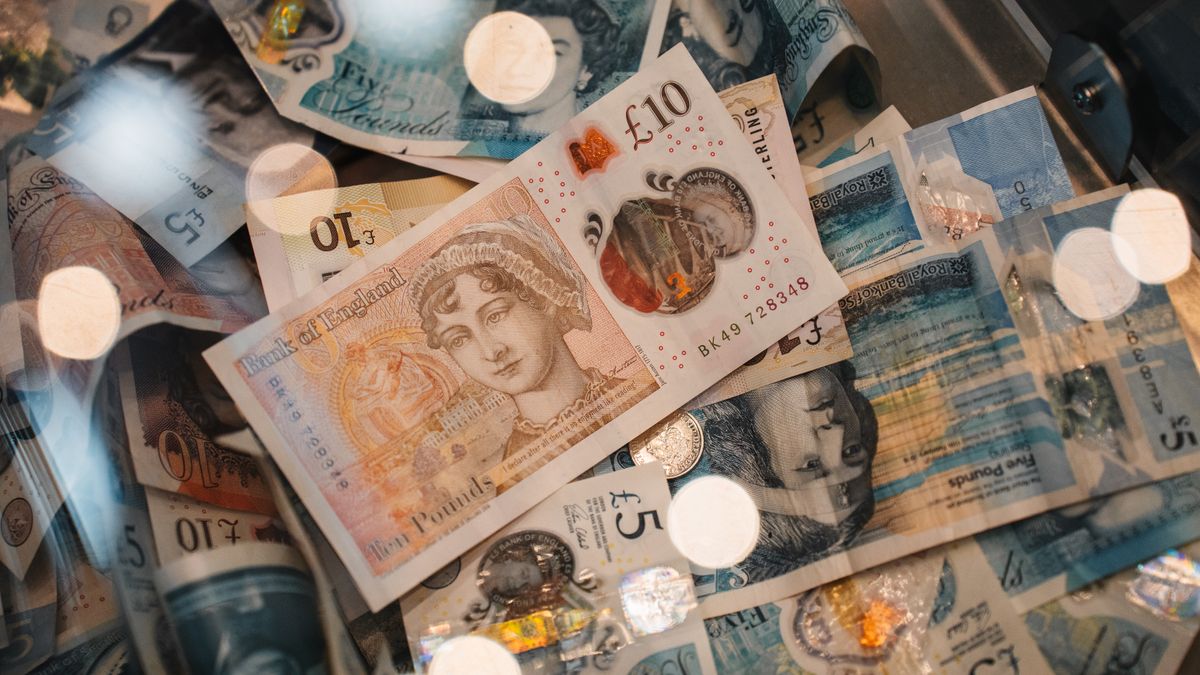
If some customers still pay cash, the bank account choice matters more than you think. Banks commonly charge roughly 0.5% to 1% to deposit business cash, and app-only banks route cash deposits through the Post Office or PayPoint with their own fees and limits.
That changes the maths people assume about cash being free. Depositing £1,000 in cash at 0.7% costs £7 before you count the time spent cashing up and walking it to a branch, which is not far off what a card machine would have charged.
The practical pairing: if cash is a big slice of your takings, favour an account with cheap, convenient cash deposits, even if it costs a small monthly fee. If cash is a rounding error, a free app-based account plus a no-contract card reader is the cleaner setup.
FAQs
Can I use a personal bank account for card payments as a sole trader?
Legally, yes, because a sole trader and their business are the same legal person. In practice most card providers want the settlement account to match your trading name, and most personal account terms prohibit business use. A free business account sidesteps both problems and keeps your tax records clean.
What is the best bank account for a card machine?
There is no single winner: the best account is one in your exact trading name, with payout-friendly clearing and cheap cash deposits if you still take cash. Starling, Monzo and Tide all offer free tiers that pair well with flat-rate card readers. If you deposit a lot of cash, a high-street account with branch access may be worth its fee.
Why is my card machine provider holding my payouts?
The most common reasons are a settlement account name that does not match your trading identity, an unusual spike in takings, or missing verification documents. Contact the provider, supply what they ask for, and next time make sure the bank account and card machine application use identical names.
Do limited companies have to use a business bank account?
Yes. A limited company is a separate legal entity, so its money must be kept in an account belonging to the company, not a director's personal account. Using a personal account muddles the company's finances and can create serious problems with HMRC and Companies House record-keeping.